
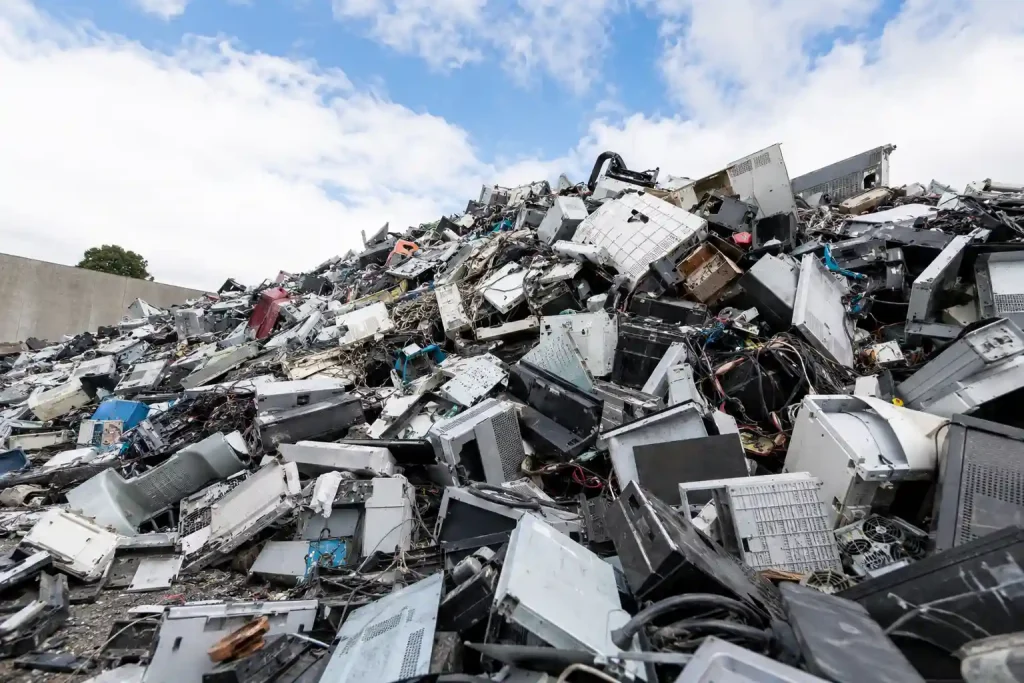
Electronic waste is becoming one of the fastest-growing waste problems in the world. Every year, millions of phones, computers, screens, batteries, routers, printers, and other electronic products are thrown away. Many of these items still have value, but once they enter the waste stream, they become part of a much bigger environmental problem.
According to the Global E-waste Monitor 2024, the world generated 62 million tonnes of e-waste in 2022. This is not a small number. It is enough to fill around 1.55 million 40-tonne trucks. Imagine a long line of trucks full of discarded electronics. That is the scale of the problem the planet is facing.
What Is E-Waste?
E-waste means discarded electronic and electrical items. These are products that use electricity, batteries, plugs, or circuit boards.
Common examples include:
| Type of E-Waste | Examples |
|---|---|
| Communication devices | Mobile phones, office phones, routers |
| Computer equipment | Laptops, desktops, keyboards, monitors |
| Home electronics | TVs, speakers, chargers, cables |
| Office machines | Printers, scanners, servers |
| Power products | Batteries, UPS systems, adapters |
The problem is not only that these items are thrown away. The bigger issue is what happens after they are thrown away.
The World Is Producing E-Waste Faster Than It Can Handle
The UN Global E-waste Monitor 2024 reported that e-waste is rising five times faster than documented e-waste recycling. That means the world is creating electronic waste much faster than it is safely collecting and recycling it.
| Global E-Waste Fact | What It Shows |
|---|---|
| 62 million tonnes of e-waste generated in 2022 | The planet is receiving a huge amount of discarded electronics |
| Only 22.3% was formally collected and recycled | Most e-waste is not handled through proper systems |
| E-waste may reach 82 million tonnes by 2030 | The problem is expected to grow |
| Valuable materials worth billions are lost | Useful resources are being wasted |
This shows a serious gap. Electronics are being produced, upgraded, replaced, and discarded quickly, but proper waste handling is not keeping up.
How E-Waste Pollutes the Planet
E-waste pollution does not always look dramatic at first. A phone in a drawer, an old router in a store room, or a broken monitor in a landfill may look harmless. But when millions of these products are dumped, burned, or handled carelessly, the damage becomes serious.
E-Waste Pollutes Soil
Electronics can contain harmful substances such as lead, cadmium, mercury, and flame retardants. When electronic waste is dumped in open areas or landfills, these substances can slowly leak into the soil.
Polluted soil can affect plants, animals, farming areas, and nearby communities. The damage may happen slowly, but it can last for many years.
E-Waste Pollutes Water
When rainwater passes through dumped electronics, harmful chemicals can move into underground water, rivers, and lakes.
This is dangerous because water pollution spreads. Once toxic substances enter the water system, they can affect people, animals, crops, and entire communities.
E-Waste Pollutes Air
In informal recycling areas, electronic waste is sometimes burned to recover metals. Burning wires, plastics, circuit boards, and batteries releases toxic smoke.
This smoke can contain dangerous chemicals that pollute the air and create health risks for workers and nearby families.
E-Waste Wastes Natural Resources
E-waste is growing because modern electronics are replaced very quickly. People upgrade phones, offices replace systems, businesses refresh devices, and older models are often pushed aside.
| Reason E-Waste Grows | What Usually Happens |
|---|---|
| Frequent upgrades | Devices are replaced before their full life is finished |
| Short product cycles | New models make older products look useless |
| Minor faults | Repairable items are treated as waste |
| Business cleanouts | Working electronics may be removed in bulk |
| Lack of awareness | People do not realize the environmental cost |
| Poor collection systems | Devices end up in landfills or informal markets |
This is why e-waste is not only a recycling issue. It is also a consumption issue.
The Hidden Cost of Throwing Electronics Away Too Early
Every electronic product has already used resources before it reaches the customer. Raw materials are mined. Parts are manufactured. Products are shipped. Energy is used at every step.
So when a device is thrown away too soon, the planet loses more than just one product. It loses the materials, energy, labor, transport, and carbon footprint behind that product.
A device that looks outdated in one place may still have years of practical value somewhere else. When electronics stay useful for longer, fewer products become waste too quickly. That small shift in thinking can reduce pressure on landfills, recycling systems, and the environment.
E-Waste and Human Health
The World Health Organization warns that unsafe e-waste handling can expose people to harmful substances such as lead, mercury, cadmium, dioxins, and other toxic chemicals.
Children and pregnant women are especially at risk because toxic exposure can affect development, breathing, learning, and long-term health.
This makes e-waste more than an environmental issue. It is also a human health issue.
Global Rules Are Becoming Stricter
The Basel Convention, an international treaty on hazardous waste movement, has expanded controls on e-waste. From January 1, 2025, international shipments of electrical and electronic waste require prior written consent from importing and transit countries.
This shows that the world is taking e-waste movement more seriously. Electronic waste is no longer seen as ordinary trash. It is a controlled waste stream because of its environmental and health risks.
Key Proof From Trusted Organizations
For businesses that want flexibility, remote access, easier scalability, and modern cloud-based calling features.
| Trusted Entity | What They Report |
|---|---|
| UNITAR and ITU, Global E-waste Monitor 2024 | 62 million tonnes of e-waste were generated in 2022 |
| Global E-waste Monitor 2024 | Only 22.3% of e-waste was formally collected and recycled |
| UNEP | E-waste is one of the fastest-growing waste streams |
| WHO | Unsafe e-waste handling releases toxic substances harmful to human health |
| Basel Convention | E-waste movement is now under stricter international control |
Final Thought
E-waste is damaging the planet because electronics are entering the waste stream faster than the world can safely manage them.
More than 62 million tonnes of e-waste were generated in 2022, and the number is expected to rise. Behind every discarded device, there are metals, plastics, chemicals, energy, and natural resources. When electronics are thrown away too early, the planet carries the cost.
Before any working electronic product becomes “waste,” it is worth remembering that its useful life may not be fully over. The longer electronics remain useful, the slower they become pollution.
E-waste may look like old technology, but for the planet, it is a growing environmental burden.
That same thinking should happen before recycling too. If equipment is still compatible and useful, businesses should ask whether it can be part of a smarter migration path.